

Smart Water Management: Redefining Precision Operations for Water Systems
I. Core Philosophy: From Reactive to Proactive Intervention
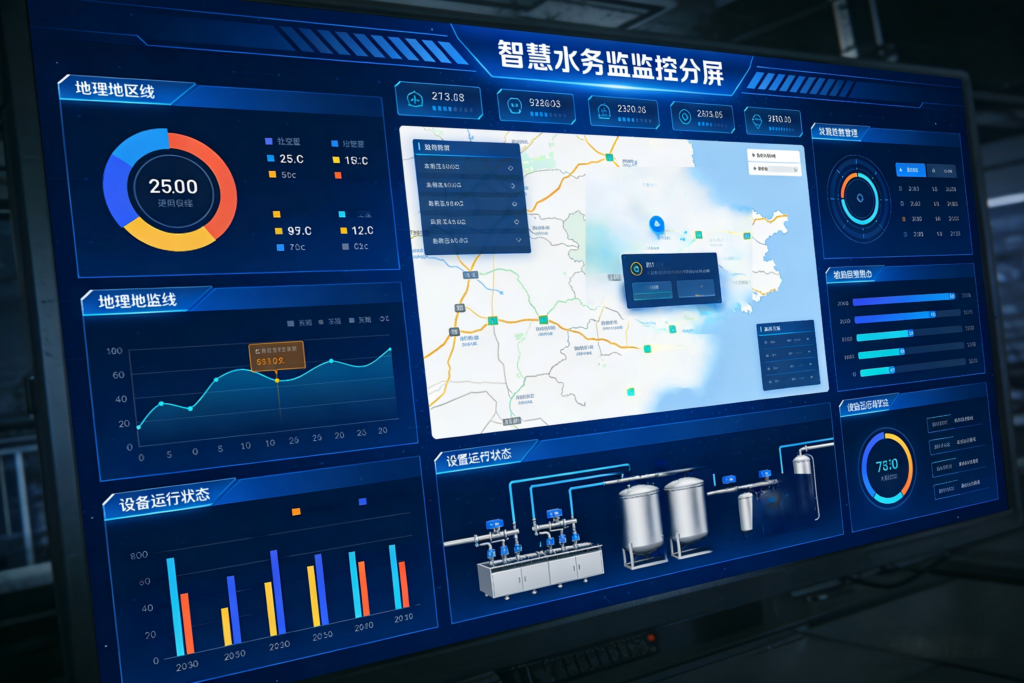
Shanghai Ledo’s Smart Water Platform leverages IoT, big data, and AI to establish an intelligent management system covering the entire chain of “monitoring-analysis-decision-maintenance.” It enables precise, visible, and predictable water system management through three key transformations:
- Data-Driven Decisions: Real-time collection of water quality, flow, and equipment status data, with AI algorithms predicting risks and generating solutions in advance.
- Closed-Loop Management: A digital workflow from early warning and task dispatch to on-site handling and feedback.
- Cross-System Collaboration: Integrated control of pumps, pipelines, and treatment plants for watershed-level coordination.
II. Technical Architecture: A Four-Layer “Water System Brain”
- Sensing Layer: Multi-parameter sensors for real-time monitoring.
- Transmission Layer: 5G/IoT-enabled low-latency data transfer and edge computing.
- Platform Layer: TianwuCloud integrates data mining, modeling, and visualization.
- Application Layer: Six scenario-based solutions (e.g., smart sponge cities, intelligent plants).

III. Core Functional Modules
- Digital Monitoring
- Real-time data display with second-level updates.
- AI video analysis for automatic detection of pollutants.
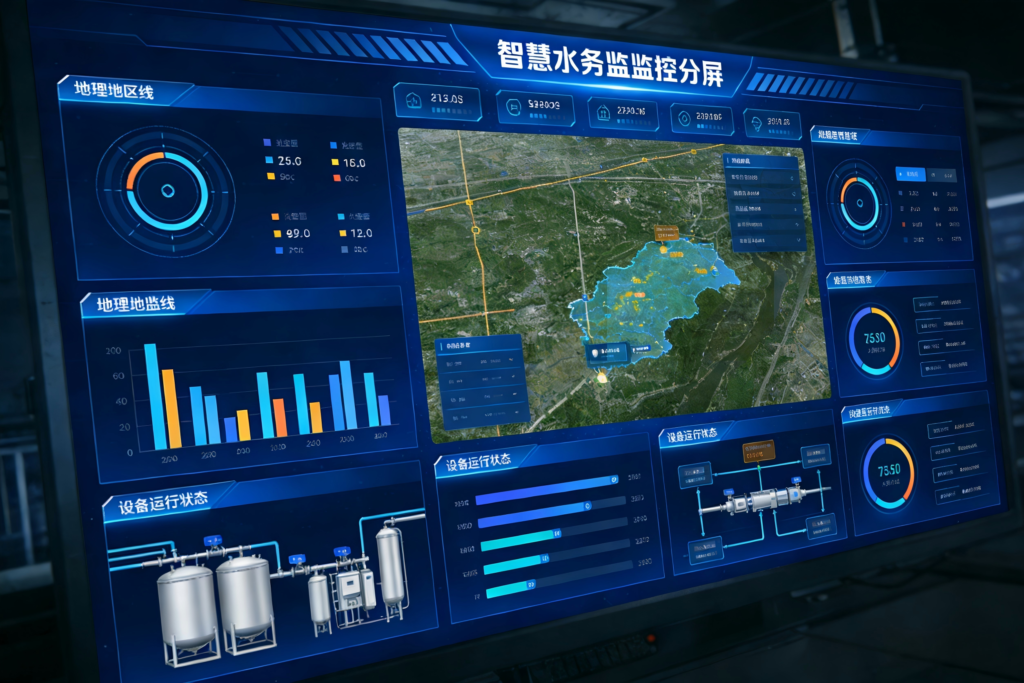
- Comprehensive Analysis
- Correlates weather/seasonal data to optimize stormwater pollution control.
- Generates watershed health reports using ecological models.
- Integrated Management
- Dynamically adjusts storage facilities based on rainfall forecasts.
- Supports data interoperability with government platforms.
- Smart Operations
- Automated reporting and mobile App for closed-loop maintenance tasks.
- Expert remote diagnosis with a knowledge database for case-based learning.
IV. Demonstrable Value
- Economic Benefits: 35%-80% reduction in labor costs, 15%-30% lower energy consumption, 25%-60% higher operational efficiency.
- Social Impact: QR-code-based public engagement enhances awareness of sponge city initiatives.
- Environmental Contributions: 3,500+ projects completed, saving 160 million m³ of water annually.