

Last month, a developer from Istanbul reached out to us. His team was designing a 12,000 m² shopping mall in Ümraniye, and he had just learned that without a greywater recycling system, the building permit simply would not be issued. “We have six months,” he told me. “Can you help?”
That conversation is about to become very common in Türkiye.
On January 1, 2026, the Ministry of Environment, Urbanization and Climate Change put into force a regulation that quietly rewrites the rules of building design in this country. According to publicly reported statements from the Ministry, rainwater harvesting systems become mandatory for:
Properties with a plot area exceeding 2,000 m²
Private buildings with a roof footprint exceeding 1,000 m²
All large-scale public buildings
And greywater recycling systems become mandatory for:
Accommodation facilities with over 200 beds
Shopping malls with a construction area exceeding 10,000 m²
Public buildings larger than 30,000 m²
The Ministry estimates these measures will save approximately 10 million cubic meters of water annually. Rainwater collected from roofs must be filtered, stored, and reused for garden irrigation and toilet flushing. Greywater from showers, bathtubs, and handwashing sinks must be treated and reused exclusively for toilet cisterns. Storage tanks are designed to retain at least 6% of the calculated annual collectible rainwater, while greywater tanks must meet at least half of the daily water demand of connected toilet cisterns.

For ongoing projects that fail to install these systems, the occupancy permit — the habitation certificate — will not be issued.
In other words: this is no longer a “nice to have.” It’s a permit gate.
Reading the Market: Where the Demand Concentrates
When we mapped the regulation against Türkiye’s construction pipeline, three clusters stood out immediately.
First, the hospitality wave. Türkiye’s tourism sector continues to expand, and 200 beds is a surprisingly low threshold. A mid-size hotel in Antalya, a boutique resort in Bodrum, a business hotel in Istanbul — all fall within scope. Each one needs a greywater system that can handle shower and basin effluent reliably, day in and day out, through peak season.
Second, the retail and commercial boom. Shopping malls over 10,000 m² are everywhere in Türkiye’s growing urban corridors. Many are already in design phase for 2026 openings. They need both rainwater harvesting (roof footprints almost always exceed 1,000 m²) and greywater recycling.
Third, the public building mandate. Hospitals, government buildings, universities, and cultural centers — all public buildings above the threshold — must comply. This is a large, stable, and visible pipeline.
What strikes me is the sheer pace. Developers who are used to thinking about HVAC, elevators, and façade systems now have to think about water recycling as a core building system — and they need partners who can deliver fast, compliantly, and without complicating the construction schedule.
The Real Challenge: Not Every Project Needs the Same Solution
Here’s something the regulation doesn’t spell out, but every engineer knows: the required water quality for toilet flushing is very different from the quality needed for garden irrigation.
And greywater from a 200-bed hotel is a completely different beast from greywater in a 30,000 m² public building.
We’ve spent years building a product architecture precisely for this kind of tiered requirement. Our philosophy is simple: one series, three tiers, fully prefabricated, configured per project.
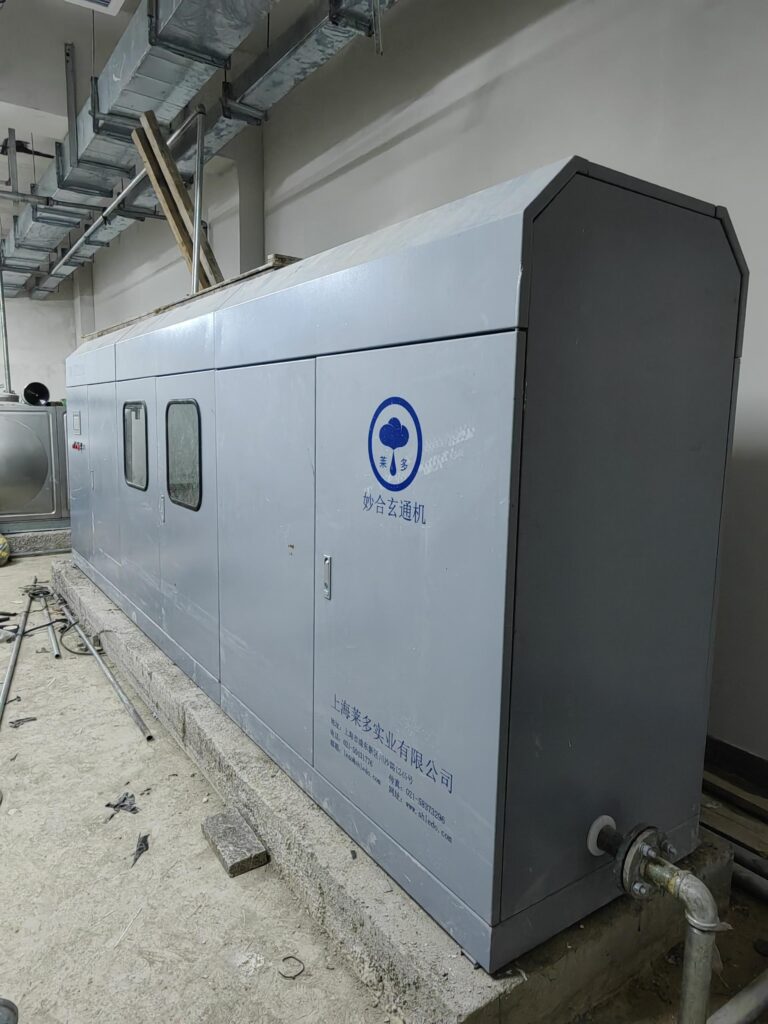
Tier 1 — Miaohe Xuantong Integrated Water Purification Unit
For: Rainwater used in garden irrigation, road washing, and landscape sprinkling
This is our workhorse for projects where the end use is non-potable but visible — green belts, road cleaning, landscape irrigation. The unit is a prefabricated, fully integrated system installed inside the equipment room or placed directly on the ground. It combines lifting, sedimentation, multi-stage filtration, disinfection, and water supply in one compact unit. It runs unattended, controlled by PLC, and communicates via Modbus RTU/RS485 for BMS integration.
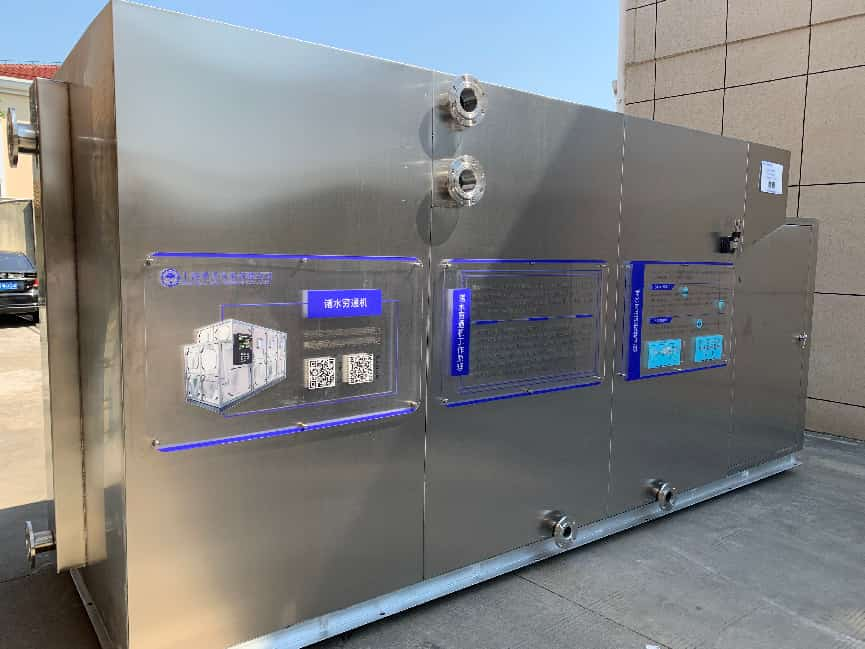
Tier 2 — Zhushui Qiongtong Integrated Water Purification Unit
For: Higher-grade reuse — landscape water bodies, premium greywater, river water treatment, and rainwater intended for toilet flushing
When the end use is toilet flushing, or when the source water is greywater from showers and basins, the treatment bar rises. Zhushui Qiongtong steps up with an enhanced treatment train — suitable for landscape water supplementation, high-quality greywater recycling, and river water purification. Like its sibling, it’s fully prefabricated, intelligently controlled, and BMS-ready.
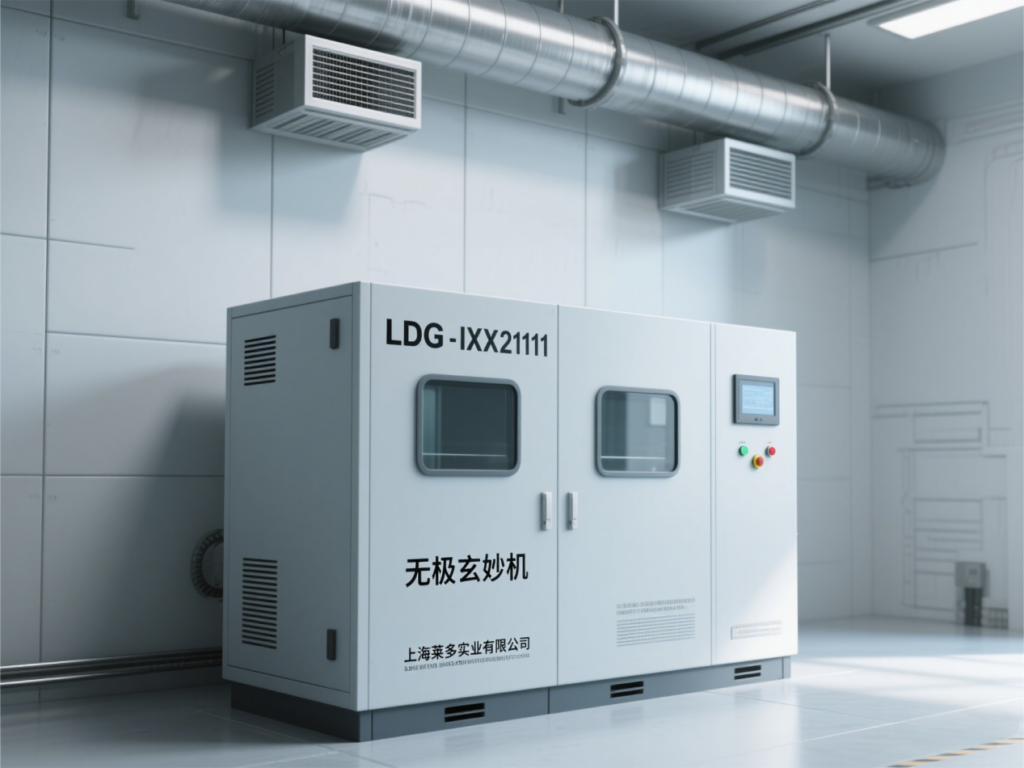
Tier 3 — Wuji Xuanmiao Integrated Water Purification Unit
For: Ultra-pure water production and seawater desalination
At the top of the pyramid sits Wuji Xuanmiao. Using advanced membrane separation technology with pore sizes down to 0.0001 microns, plus continuous electrochemical regeneration, it delivers water purity that meets electronic-grade ultrapure water standards. It handles seawater with TDS up to 45,000 mg/L, achieves desalination rates ≥98%, and brings per-ton energy consumption to ≤3.5 kW·h through energy recovery technology.
Why Prefabrication Matters More Than Ever in 2026
I want to pause on one detail that developers often underestimate: schedule risk.
Traditional concrete-built water treatment rooms take weeks to construct. Welded steel systems require skilled labor on site. Both add risk to a project that’s already racing against a permit deadline.
Our entire product series is prefabricated, modular, and plug-and-play. The unit arrives, gets positioned in the designated equipment room or outdoor area, connects to inlet/outlet piping and power, and starts running. For a project with a six-month deadline, this difference is not incremental — it’s the difference between getting the occupancy permit and missing it.
We recently completed a 2,300 m³ underground rainwater storage system using our LDX-PP-5 modules. The assembly took three days. Three days for 2,300 cubic meters. That’s the kind of speed the 2026 mandate is going to demand — and frankly, the kind of speed that gives developers peace of mind.
What We’re Looking For in Türkiye
We’re not approaching this market as a vendor dropping off equipment. We’re looking for long-term strategic partners — distributors, EPC contractors, and design firms who understand the local regulatory nuances and want to build something durable.
Our commitment is straightforward:
Complete system solutions or individual components, configured to your project
Prefabricated units that shorten your construction schedule
BMS integration via Modbus RTU/RS485, with BACnet optional
Remote monitoring capability through our IoT platform
Local technical support and spare parts strategy
The regulation is clear. The deadline is fixed. The market is enormous. What’s missing is a reliable manufacturing partner who can deliver compliant, intelligent, and beautifully engineered water systems at scale.
That’s the gap we want to fill — together.
A Personal Note
I’ll be honest. When our Istanbul customer first contacted us, I wasn’t sure how fast we could move. But after walking through his project requirements, mapping them against our product tiers, and realizing that Miaohe Xuantong fit his mall perfectly, the path became obvious.
Türkiye’s 2026 mandate isn’t just a compliance hurdle. It’s a rare moment where regulatory push and environmental necessity align with technological readiness. The buildings constructed in 2026 and beyond will define the country’s water resilience for decades.
We want to be part of that story. And if you’re a developer, contractor, or distributor reading this, we should talk.
LEDO — Creating Harmony Between People and Water