
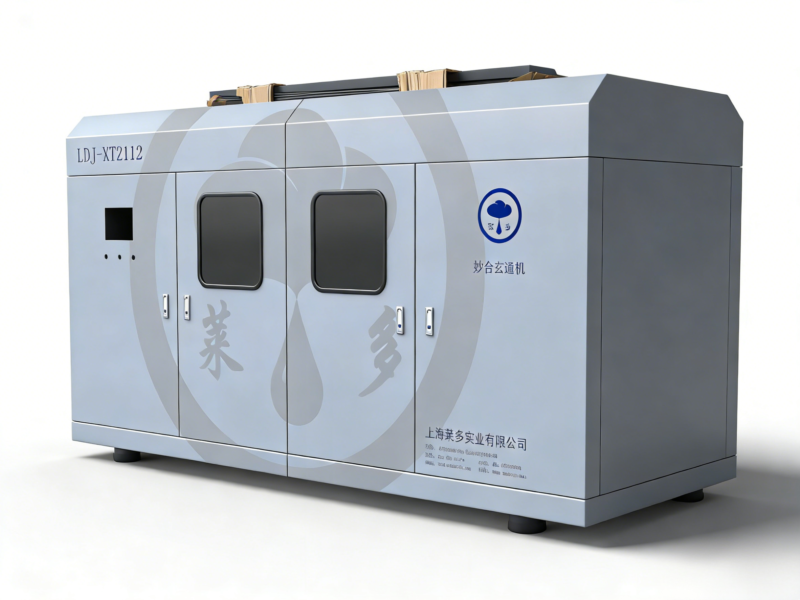
Have you ever experienced streets turning into rivers and traffic grinding to a halt after a heavy downpour—a phenomenon often called “urban sea-viewing”? Are you concerned about increasingly scarce water resources while precious rainwater is wasted? The traditional urban development model relies on massive gray infrastructure (pipes, pumping stations) for passive drainage. This approach is not only costly and time-consuming to construct but often proves inadequate in the face of extreme weather.
Today, a revolutionary solution is leading the future of urban water management: Prefabricated Integrated Stormwater and Sponge City Equipment. Instead of fighting against nature, this approach uses intelligent, modular components to work in harmony with it, allowing cities to “breathe” like a sponge. Let’s delve into the six key dimensions that make this approach irreplaceable.
1. An Aesthetic Revolution: From “Industrial Exposure” to “Environmental Integration”
Traditional water treatment facilities often have an unwieldy, industrial appearance, with on-site welded pipes, exposed cables, and support structures resembling scars on the urban landscape. Prefabricated equipment changes this entirely.
- Factory Precision, Standardized Aesthetics: All components are prefabricated in factories, adhering to unified design language and standards. This results in clean, refined equipment that can integrate seamlessly into the surrounding landscape—whether in a community park, commercial plaza, or municipal road—becoming a visual asset rather than an eyesore.
- A 200% Improvement in Neatness: Compared to traditional on-site assembly, prefabricated units integrate all piping and control systems internally, eliminating visual clutter and achieving a leap from “function-first” to “equal emphasis on function and aesthetics”.
2. An Efficiency Revolution: From “Months of Work” to “Days to Completion”
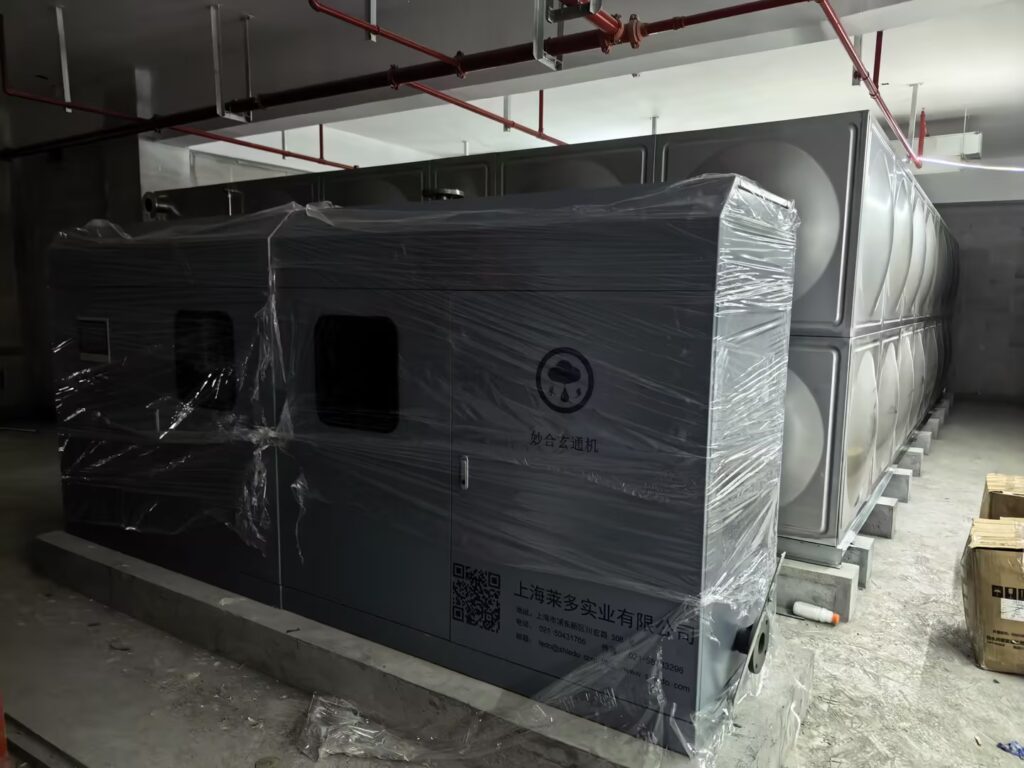
Time is cost, and efficiency is benefit. The core advantage of prefabricated technology lies in its drastic improvement in efficiency.
- Assembled Construction, Controlled Quality: The heavy work of on-site pouring and welding is shifted to the controlled factory environment. On-site work involves only modular assembly using standardized connectors, similar to building with LEGO blocks. This significantly reduces reliance on individual worker skill, ensuring consistent and reliable installation quality from the ground up.
- Speed Increase of Over 60%: Taking a 500-cubic-meter storage tank as an example, traditional reinforced concrete construction requires over 20 days, while using prefabricated PP modules allows completion of the main structure in about 7 days—reducing the timeline by more than 60% and greatly minimizing disruption to the surrounding environment and traffic.
3. A Green Revolution: From “Resource Consumption” to “Circular Sustainability”
“Green and eco-friendly” is not just a slogan but a principle embedded throughout the entire lifecycle of prefabricated equipment, from production to decommissioning.
- Standardized Factory Production, Minimal Material Waste: Based on precise process calculations, factory production maximizes the use of raw materials, reducing waste at the source. Many products, such as PP modules, extensively use recycled polypropylene materials. The carbon emissions from their production process are approximately 80% lower than those of traditional concrete, aligning with “dual carbon” goals.
- Circular Reuse, Adapting to Change: When project sites need modification or equipment requires upgrading, prefabricated modules can be easily disassembled, relocated, and reassembled at new sites. This reusability avoids the massive construction waste generated by demolishing traditional concrete structures, resulting in lower lifecycle costs and representing a genuinely sustainable choice.
4. A Smart Revolution: From “Passive Response” to “Active Perception”
Modern water management no longer operates in the dark; it requires “smart eyes.” Prefabricated equipment is the ideal carrier for smart water solutions.
- Comprehensive Sensing, Data-Driven Operation: Equipment is equipped with built-in IoT sensing systems (e.g., water level, quality, flow sensors) that collect real-time data on every drop of water’s “journey”. This data converges on a cloud platform for in-depth mining and analysis.
- Intelligent Operation & Maintenance, Precise Decision-Making: The system enables fully automatic, unattended operation. It can trigger alarms and activate purification equipment automatically when water quality is abnormal, or replenish water automatically when levels are low. Managers can gain a clear overview of distributed equipment via phones or computers, transitioning from “firefighters” to “predictive managers,” thereby improving decision-making accuracy and operational efficiency.
5. A Resilience Revolution: Building an “Elastic Water System” for Cities
The essence of a Sponge City is to enhance urban “resilience”—the ability to withstand climate shocks and recover balance.
- Source Control, Process Management: Prefabricated equipment utilizes integrated measures like “infiltration, detention, retention, purification, utilization, and drainage” to absorb and store rainwater locally during rainfall. This effectively reduces peak flow, delays runoff convergence, and alleviates pressure on municipal drainage networks from the source.
- Resource Utilization, Turning Waste into Resource: Collected rainwater, after purification, can be reused for green irrigation, road cleaning, and landscape replenishment, substituting for precious tap water and achieving rainwater resource utilization. This is not just disaster mitigation but also resource creation, significantly improving water resource efficiency.
6. Proof in Practice: Shanghai Ledo’s 2000+ Project Solutions
Theoretical advantages must be validated through practice. As an industry pioneer, Shanghai Ledo Industrial Co., Ltd. has successfully implemented over 2000 Sponge City and water environment management projects, accumulating extensive experience. We have developed a comprehensive portfolio of prefabricated products for diverse scenarios, including:
- Precision Purification Core: Such as the Multi-Water Purification and Circulation Machine and the Harmonious Mystic Water Purification Machine, suitable for high-standard purification of stormwater and river/lake water.
- Efficient Storage Modules: Such as Rainwater PP Modules and the Hydro-Carbon Gallery-Type Magic Cube, offering high-load-bearing, long-life underground storage solutions.
- Intelligent Treatment Units: Such as the Smart Deep Well Physicochemical Machine and the Photocatalytic Purification Reactor, integrating advanced treatment with IoT monitoring.
- Special Application Equipment: Such as the Particle Separation Magic Cube, specifically designed to address complex flow issues like large-diameter pollution interception and initial diversion.
These products function like a toolkit, allowing flexible configuration based on project needs to create tailored “water resilience” solutions for cities.
Conclusion
Prefabricated integrated stormwater and Sponge City equipment represent not just a technological upgrade but a shift in urban governance philosophy: from confronting nature to cooperating with it, from gray infrastructure dominance to a fusion of green and gray facilities. It is the inevitable choice for building resilient, low-carbon, livable cities and the smarter water environment we leave for the future.
If you are seeking more efficient, economical, and intelligent water system solutions for your project, we welcome you to learn more about Shanghai Ledo Industrial Co., Ltd. Let us use mature technologies and products validated by over 2000 projects to help you build a beautiful vision of harmony between people and water.