
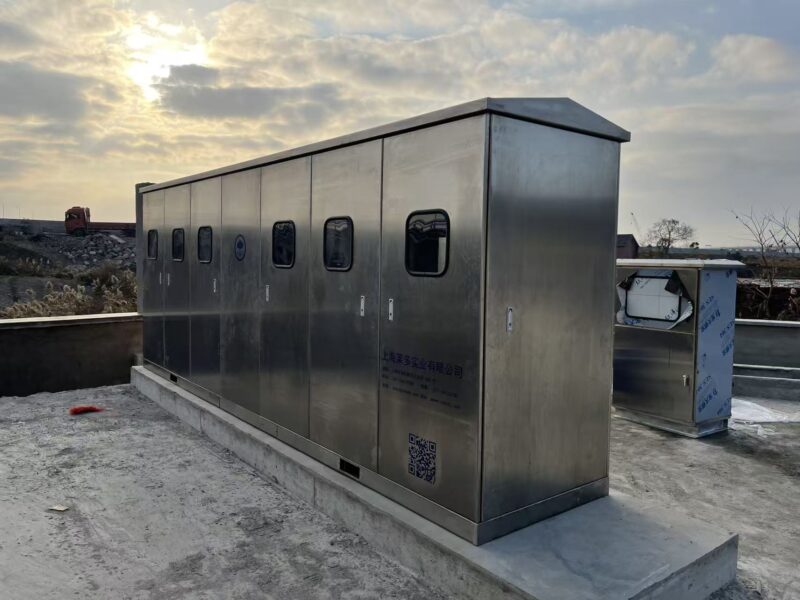
In recent years, the “Sponge City” has become a popular term in urban development. We commonly see facilities like permeable pavements, rain gardens, and storage tanks. These act as the city’s “spongy bodies,” effectively addressing the “infiltration, detention, retention, and drainage” of stormwater and significantly mitigating urban waterlogging .
However, a deeper challenge emerges: What is the actual quality of the rainwater we work hard to collect and store? Can it be safely and economically reused for green irrigation, road cleaning, and landscape water replenishment, thereby truly achieving “rainwater resource utilization” and conserving precious tap water? This is the key step in determining the true success of a Sponge City project and achieving harmonious coexistence between people and water .
1. The Challenges of Rainwater Utilization: Simpler Said Than Done
Collected rainwater is not “pure water.” It typically contains suspended solids like leaves and sediment, and may even be mixed with organic matter, heavy metals, and other dissolved pollutants. Direct use can not only clog sprinklers but also pose potential risks to soil and plants. Traditional purification methods often have limitations :
Incomplete Purification: Simple filtration cannot remove odors, pigments, or dissolved pollutants.
Tedious Maintenance: Filter screens are prone to clogging, requiring frequent cleaning or replacement, which increases operational costs.
Safety Risks: Potential accidental cross-connection between the reclaimed rainwater system and the municipal water supply pipeline could cause contamination.
These issues can render the “rainwater reuse” function of many sponge facilities ineffective, diminishing the return on investment .
2. The Key to a Solution: Equipping Sponge Cities with an “Intelligent Purification Heart”
Addressing these pain points requires a highly integrated, intelligent, and efficient purification core. Leading technology companies in the industry, such as Shanghai Laiduo Industrial Co., Ltd., have provided solutions. Their Photocatalytic Purification Reactor acts like an “intelligent heart” for the rainwater reuse system, achieving advanced purification and safe reuse through synergistic multi-technology processes .
The technical core of this product lies in its “Integrated Multi-Reaction Technology” design philosophy:
Advanced Purification (Core): It incorporates advanced TiO2 Photocatalytic Technology. Essentially, this process mimics photosynthesis. Under light exposure, the photocatalyst generates highly oxidizing substances that efficiently decompose organic matter, remove odors and pigments, and can even degrade some heavy metal ions, achieving sterilization and disinfection. This goes far beyond conventional filtration .
Precise Pretreatment: The built-in high-speed microfilter effectively removes suspended solids and large particles from the water, providing “pretreatment” for the subsequent photocatalytic reaction and ensuring the core process operates efficiently.
Safety Assurance: Equipped with specific air-water separation technology and a water supply safety protection system, it physically prevents the risk of reclaimed rainwater backflow contaminating the municipal tap water network. This is a fundamental safeguard for safe reuse.
Smart Operation and Maintenance: Featuring self-sensing flow regulation and water quality monitoring technology, the device can automatically adjust its operation based on system demand. It can remotely transmit data, providing managers with clear insights into water volume, quality, and energy consumption, enabling intelligent management and reducing manual maintenance costs .
3. Why is it an Ideal Partner for Sponge Cities?
Integrating such advanced purification equipment into the Sponge City system offers multiple benefits:
Enhances Project Value: Upgrades sponge city facilities from a single “flood prevention and drainage” function to a comprehensive solution integrating “flood control, water resource utilization, and environmental improvement” .
Achieves True Water Savings: Deeply purified rainwater can meet or even exceed non-potable water standards, allowing for safe use in daily irrigation and cleaning, significantly reducing reliance on tap water .
Low-Carbon and Energy-Efficient: Photocatalytic technology is primarily driven by light energy, and the entire system has low energy consumption, aligning with green and low-carbon development goals.
Reduces Life-Cycle Costs: While the initial investment might be higher, its high automation and ease of maintenance can effectively lower long-term operational, labor, and material costs .
Conclusion: Towards an Era of Intelligent Water Management in Harmony with Water
Sponge City construction should not stop at “retaining” rainwater; it must strive to make the water “clean” and “usable” . By introducing innovative smart water equipment like the Photocatalytic Purification Reactor, we can more efficiently solve the final hurdle in rainwater resource utilization: purification and safety .
As a company always committed to being a “Creator of Harmony Between People and Water,” the products and technical solutions from Shanghai Laiduo Industrial Co., Lt

new life can we truly build resilient, sustainable, and livable cities.
d. represent the future direction of Sponge Cities towards refinement, intelligence, and high value . Only when every
drop of rainwater is given
If you are interested in rainwater purification and reuse technologies and wish to learn more about the technical details or application cases of the Photocatalytic Purification Reactor, please feel free to visit the official website of Shanghai Laiduo Industrial Co., Ltd. at or call for consultation and more professional advice.