

(I) Product Overview
The Smart Micro-Powered Rain Garden is a Sponge City facility that integrates all six core functions: infiltration, retention, storage, purification, utilization, and discharge. It revolutionizes the application of rain gardens in Sponge City development by overcoming the limitation of traditional rain gardens, which primarily focus on infiltration, through a全新的 concept and perspective. Centered on a micro-circulation power system, with nutrient substrate, shrubs, and herbaceous vegetation as the main body, water storage ecological cells as the foundation, a micro-circulation transport system as the core hub, soil shallow sensing, water regulation, and air pressure balance devices as guides, and smart water management and delayed overflow facilities as safeguards, it forms a self-sufficient, self-sustaining, self-purifying, and self-circulating ecological sponge system. This new type of prefabricated Sponge City facility serves to collect runoff from its own site and surrounding areas, reduce non-point source pollution, store water for reuse, provide slow release of total runoff volume, help restore groundwater levels, while also offering water purification and ecological aesthetic benefits.
(II) Equipment Configuration
The main structure of the Smart Micro-Powered Rain Garden primarily includes a water storage layer, vegetation, nutrient substrate, a micro-powered circulation system, and overflow facilities.
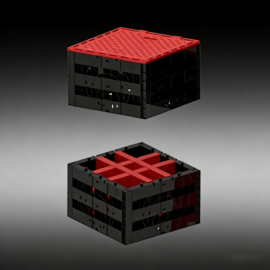
The micro-powered circulation system generally includes: water storage ecological cells and auxiliary facilities, intelligent liquid level sensors (signal: 4-20mA, tank range: 0-0.5m), a shallow soil sensing system (range: 0~100%, measurement accuracy: 0~50%(m³/m³)), a water flow regulation system (① must have the function of intelligently adjusting based on the water storage volume of rain-fed capillary cells; ② must have the function of automatically recording water volume and remotely transmitting data to the smart water network; ③ must have anti-fouling functionality), an air pressure balancing device (air exchange rate: 40~157L/s), a micro-circulation transport system (transport rate: 22L/min), an intelligent central regulation system (PLC touchscreen, HMI, full online simulation tracking of usage status, displaying real-time liquid level changes, allowing self-adjustment of any liquid level node as needed, dynamically displaying online status of various loads, built-in fault monitoring system capable of automatically detecting specific fault locations and prompting), and multi-core control cables.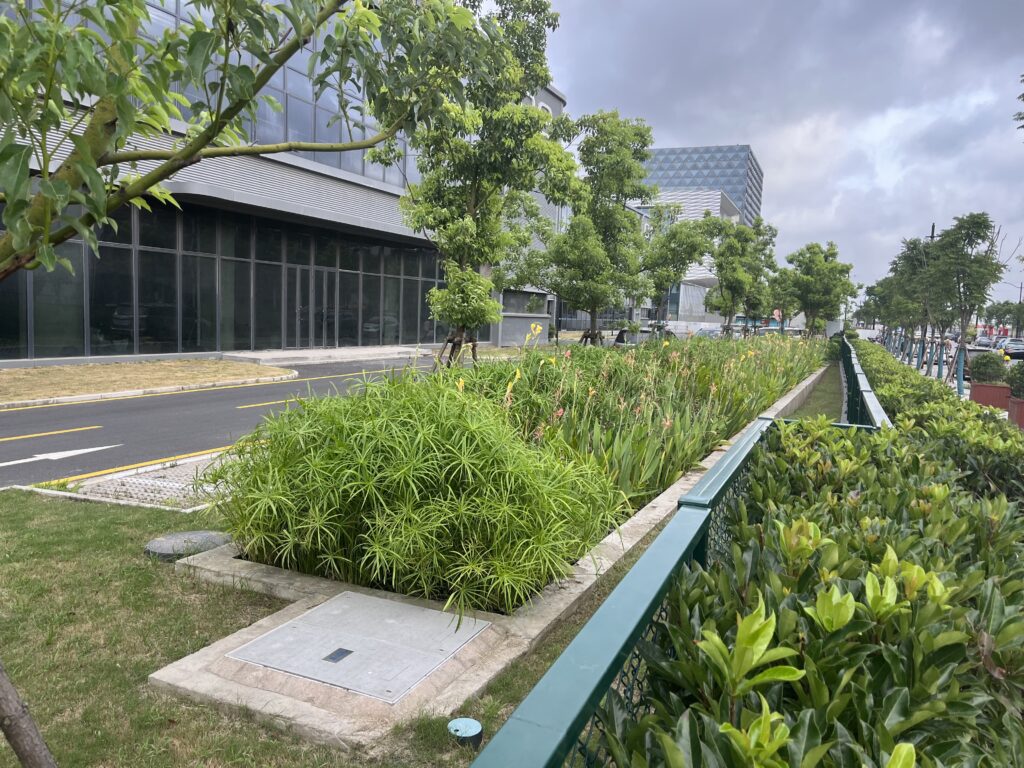
(III) Working Principle
Rainwater collected from surfaces flows into the Smart Micro-Powered Rain Garden, where it is purified through the combined action of plants and nutrient substrate. Part of the water is stored in the water storage ecological cells, and part infiltrates directly into the ground to recharge groundwater. As rainwater volume increases, once the clean water in the storage cells and nutrient substrate reaches saturation, subsequent rainwater overflows via the slow-release overflow facilities into the downstream stormwater管网. During dry periods, the rainwater stored in the ecological cells is automatically supplied to the plant system by the micro-powered circulation system, based on the nutritional needs of the vegetation and intelligent monitoring by the sensing system, ensuring stable and循环 operation of the entire ecosystem.
The system offers the following advantages:
(1) Replaces conventional irrigation systems, saving on piping and sprinklers, shortening construction time, and reducing post-installation maintenance complexity.
(2) Automatically adjusts water volume in the storage ecological cells based on soil moisture conditions, ensuring adequate water for plant growth with simple maintenance.
(3) Automatically distributes and delivers nutrients to each plant according to its growth characteristics and status, reducing养护成本.
(4) Incorporates smart IoT technology for remote management, monitoring, supervision, and statistical analysis.
(5) Water storage ecological cells have high compressive strength, ensuring safety and reliability.
(6) Prefabricated design allows for flexible assembly according to terrain, enabling quick installation.
(IV) Main Functions
(1) Purifies rainwater and reduces pollution through plant interception and organic基质 filtration.
(2) Maximizes the use of runoff to recharge groundwater; allows for the collection and reuse of treated rainwater, alleviating water resource shortages.
(3) Regulates ambient air humidity and temperature through plant transpiration within the garden, helping to mitigate the urban heat island effect and improve the microclimate.
(4) With proper design and maintenance, improves the community environment, provides food and habitat for wildlife, and enhances biodiversity.
(5) Reduces peak flood flow through retention and storage, protects downstream pipelines, structures, and water bodies by minimizing direct discharge, achieving “no competition for pathways during rain, orderly discharge after rain, and effective flood prevention.”


Reviews
There are no reviews yet.