
In 2018, I Saw What Actually Happens Inside an Underground Rainwater Tank
In 2018, I was invited to look at a four-year-old rainwater harvesting tank in Ningbo. The client said the tank was clogged, the water was starting to smell, and the pumps kept tripping.
We opened the access hatch and shone a torch inside. There was sludge up to mid-calf on the floor. A sticky layer of biofilm covered the module surfaces. The only area you could reach was directly beneath the inspection opening. Everything beyond that was dark, inaccessible and effectively out of control.
That project used a PP modular rainwater tank. At the time, that was the standard choice for underground rainwater collection systems. The client’s chief engineer said something I will never forget: “If a person could simply walk inside this tank, we wouldn’t be having this conversation.”
Honestly, I had no good answer. The project was ours. We supplied the modules.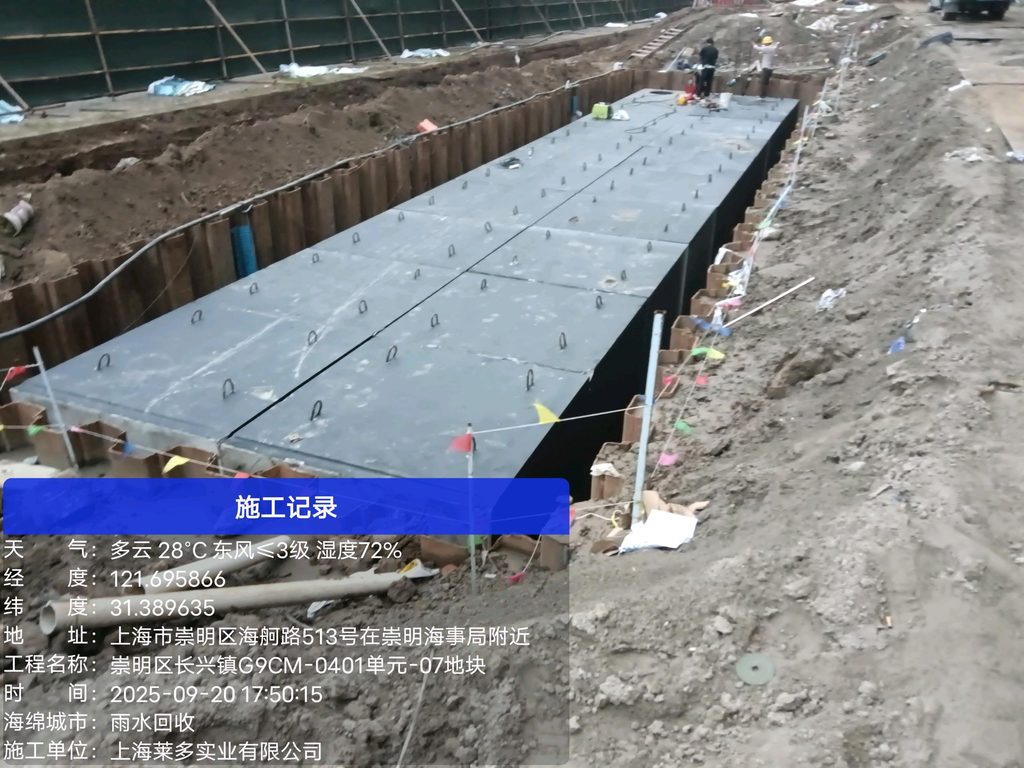
Most Underground Rainwater Storage Tanks Are Never Truly Cleaned
The conventional approach to cleaning a buried water storage tank is fairly simple: push a high-pressure hose through the access cover, spray in random directions, pump out the wastewater and hope for the best.
If you have ever done this on a real project, you know how ineffective it is. The jet cannot reach the far corners of a large tank. You cannot see where the sludge has hardened or where algae has attached to the walls. You cannot measure the thickness of the sediment layer. And if there is stubborn material at the bottom, you often just dilute it and call the job done.
The industry treated this as normal. Tanks were buried underground, out of sight, out of mind. Yet the consequences of poor maintenance always came back slowly: reduced effective storage volume, unstable effluent quality, odor issues and expensive pump repairs.
The real problem was that we had designed rainwater storage tanks that could not be serviced, or even inspected.
A Different Way: Design a Rainwater Storage Tank People Can Enter
In 2019, we started working with carbon-hydrogen composite materials. It is a rigid structural composite: harder than polypropylene, significantly stronger under compression, and more weather-resistant. At first, the goal was simple: find something stronger and more durable than PP modules. The material tested well beyond our expectations.
But a question kept coming up in our design meetings: what is the point of making a stronger tank if you still cannot clean it?
One of our engineers reminded us of an older logic: the old concrete water tanks lasted decades because someone could climb inside once a year, roll up their sleeves, and actually clean the walls and floor. If we wanted a modern modular water storage system to last, it had to be maintainable. It had to be walkable.
That conclusion changed our structural direction. Instead of creating a closed cavity packed with small plastic blocks, we chose a gallery-type layout: a tank built from prefabricated carbon-hydrogen components, with one large, continuous, walk-in corridor running through the middle.
Making the Tank Walkable Without Sacrificing Load Capacity
The first dimensions we tested were 1.8 m high and 1 m wide. That gives an adult just enough space to bend down and move around. But it is not enough to bring in a cleaning cart, drag a water hose behind you, or work with any real efficiency. The corridor needed to be a workspace, not an inspection gap.
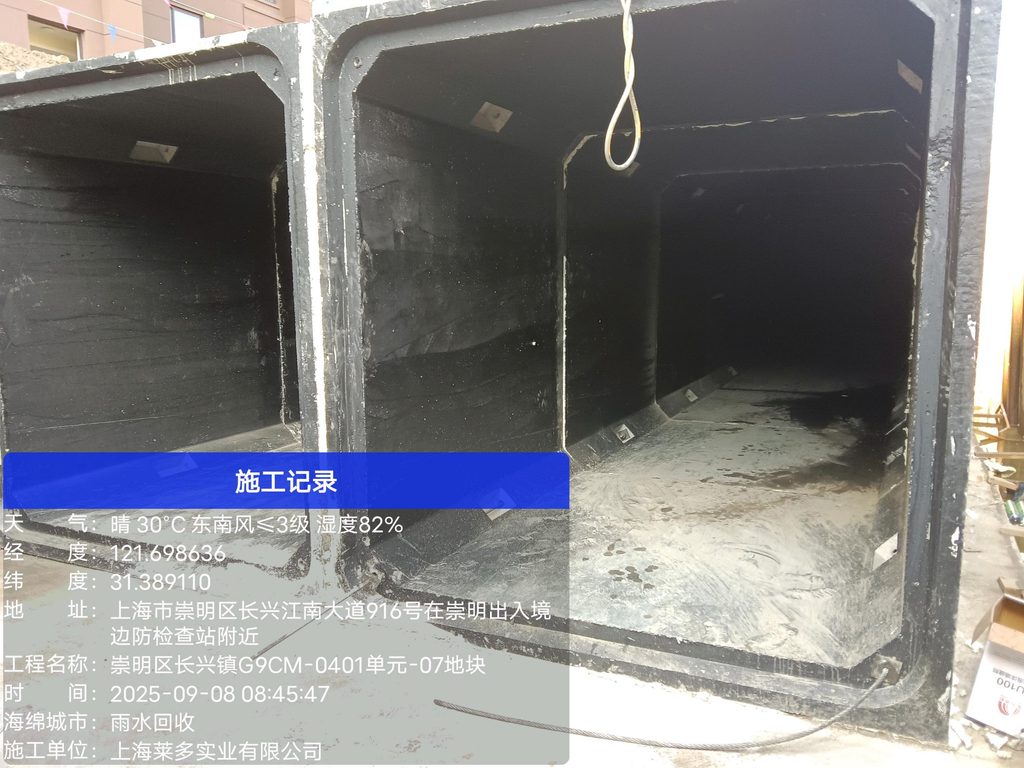
In the end, we made the main corridor of the gallery modular tank 2.1 m high and 2 m wide. A person can stand up straight inside the tank. Two people can pass each other comfortably. A tracked cleaning machine, a small robotic crawler or a high-pressure washing unit can move through the corridor without being disassembled.
When the tank has multiple galleries, the individual corridors are connected by openings at least 1.6 m high and 1 m wide, placed at designated points. You can move from one gallery to the next without going all the way back to the entrance.
Opening up a large internal space came with structural pressure. We recalculated the entire load path and redesigned the components around the galleries. The final structure passes third-party type testing with a positive and lateral load capacity of at least 500 kN/m². In plain language: the tank can handle roughly 50 tonnes per square metre, enough for a heavy fire truck or a loaded concrete mixer to park above it without issue.
Gallery Modular Tank vs PP Modular Tank: Not the Same Product
To a purchaser, both systems are sold as “modular water storage.” Functionally, they are not the same product.
A PP modular tank is made of high-void-ratio plastic cubes arranged inside a waterproof membrane. It stores water, but it is not designed for people to enter. In practice, internal inspection and cleaning are extremely difficult.
A gallery modular tank is a prefabricated structural tank with a defined walk-in gallery. It is designed for maintenance from the first sketch. You do not have to rely on guesswork when the tank has been buried for five years. You open the access hatch, walk in, inspect the surface, clean it and walk out.
If a tank cannot be maintained, it is not sustainable. That is the core difference.
Installed in 2021: Nine Galleries Under a Municipal Stormwater System
The first full project using the system was a municipal stormwater detention and rainwater harvesting tank in Shandong Province. The tank volume was 800 cubic metres, arranged with nine independent galleries.
When the client’s engineer stepped inside during installation, he said to me: “I have worked on municipal water projects for a long time. This is the first time I feel a tank is actually manageable.”
Since then, we have added underwater cameras and monitoring sensors at key points, so the inside of the tank can be checked from a control room at any time. The facility is cleaned twice a year.
How We Clean a Buried Rainwater Tank
When we returned this spring to watch the semiannual maintenance, one worker pushed a washing unit through the gallery and cleaned the tank in about two hours. He could see every wall, every joint and every corner. The whole process was visible; nothing had to be guessed.
When he finished, he collected a water sample at the outlet that looked cleaner than some municipal tap water.
What This Means for Sponge City Projects and Underground Water Storage
Engineers often ask how to inspect and maintain underground rainwater collection tanks after they are buried. For sponge city projects, where tanks are placed under parking lots, green spaces and driveways, that question is particularly important.
The answer is not to make faster pumps or stronger chemicals. It is to build a tank that allows people and cleaning equipment to get inside. A walkable gallery design turns a buried water storage facility from a “black box” into a serviceable asset that can be monitored, maintained and kept in good condition for decades.
It took us seven years to work out what should have been obvious: if you cannot walk into your rainwater tank, you will never really know what is happening inside it. And if you cannot clean it, eventually you will pay far more than the price of a better tank.